Hair Protein Treatment Before and After: What to Expect, Benefits, Results & Aftercare
If your hair feels weak, dry, stretchy, frizzy, or damaged from coloring and heat styling, you may have heard about hair protein treatments. These treatments are designed to help strengthen the hair fiber and improve the look and feel of damaged or fragile hair.
But what actually happens before and after a hair protein treatment? How long does it take to see results? Can protein treatments make hair smoother and shinier? And how can you avoid making your hair stiff or brittle from too much protein?
In this complete guide, we’ll explain what hair protein treatments do, what your hair may look and feel like before and after treatment, the benefits, possible drawbacks, aftercare tips, and how to decide whether your hair needs protein.
What Is a Hair Protein Treatment?
A hair protein treatment is a conditioning treatment that contains proteins or protein-derived ingredients designed to temporarily reinforce and condition the hair.
Hair is primarily made of a protein called keratin. Everyday exposure to heat, chemical treatments, UV rays, friction, brushing, and environmental factors can affect the hair’s structure and appearance.
Protein treatments commonly contain ingredients such as:
- Hydrolyzed keratin
- Hydrolyzed wheat protein
- Hydrolyzed rice protein
- Hydrolyzed silk protein
- Hydrolyzed collagen
- Amino acids
- Plant-derived proteins
Because many protein ingredients are hydrolyzed into smaller components, they can interact with the hair surface and help improve its feel and appearance.
It’s important to understand that a protein treatment does not permanently repair every type of hair damage. Instead, it can temporarily improve the appearance, manageability, strength, and feel of the hair.
Hair Protein Treatment Before and After: What Changes?
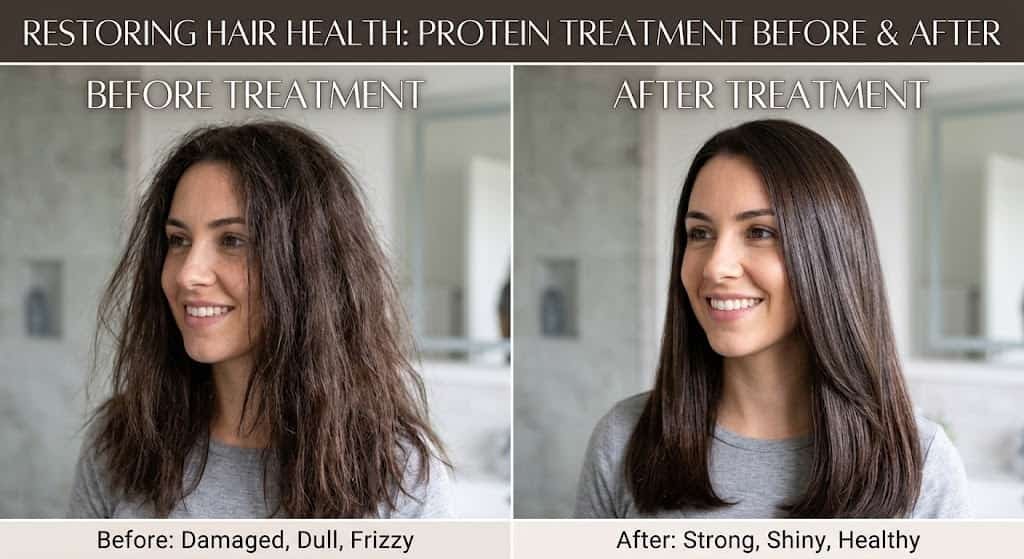
One of the biggest reasons people try protein treatments is the visible difference between their hair before and after treatment.
However, results vary depending on hair type, level of damage, product used, and how frequently the treatment is performed.
Before a Protein Treatment
Hair that may benefit from a protein treatment can sometimes look:
- Dry and dull
- Frizzy
- Weak or fragile
- Difficult to style
- Prone to breakage
- Limp or lacking structure
- Overly stretchy when wet
- Rough at the ends
- Damaged from bleaching or coloring
- Difficult to detangle
Not everyone with dry hair needs protein. Sometimes dryness is primarily related to insufficient conditioning, environmental exposure, or excessive washing.
After a Protein Treatment
After a suitable protein treatment, hair may appear:
- Smoother
- Shinier
- More manageable
- Stronger-feeling
- Less frizzy
- Easier to detangle
- More structured
- Less prone to snapping during everyday handling
Some people notice a difference immediately after washing and styling, while others may need several treatments before noticing a meaningful change.
Hair Protein Treatment Before and After for Damaged Hair
Damaged hair is one of the most common reasons people use protein treatments.
Hair can become damaged through repeated:
- Bleaching
- Permanent coloring
- Relaxing
- Perming
- Straightening
- Curling
- Blow-drying
- Flat ironing
- Brushing
- Tight hairstyles
- Sun exposure
When hair becomes highly processed, it may feel porous and fragile.
A protein-containing treatment can help improve the feel and manageability of damaged hair by depositing conditioning ingredients onto or into the hair structure.
What to Expect
If your hair is damaged but still responds well to protein, you may notice that it feels more structured and less mushy or overly stretchy when wet.
After drying, your hair may look smoother and more polished.
However, severely damaged hair may still have split ends or broken areas. A protein treatment cannot restore a completely damaged strand to its original condition.
A haircut may still be necessary for severely split or broken ends.
Protein Treatment Before and After on Curly Hair
Curly and coily hair can sometimes benefit from protein treatments, particularly when strands have been chemically processed or frequently exposed to heat.
Healthy curls generally need a balance between conditioning, moisture, and strength.
If your curls have recently become:
- Limp
- Weak
- Difficult to define
- Overly stretchy
- Frizzy
- Less resilient
a protein treatment may be worth considering.
After treatment, some people notice that curls have better structure and definition.
However, curly hair can also become stiff if protein is used too frequently.
That’s why it’s important to observe how your hair responds rather than following a rigid schedule.
Protein Treatment Before and After on Straight Hair
Straight hair can also benefit from protein-containing treatments, especially when it has been colored, bleached, or frequently heat styled.
Before treatment, damaged straight hair may look:
- Flat
- Frizzy
- Rough
- Dull
- Dry at the ends
- Difficult to manage
After treatment, it may appear smoother and shinier.
For naturally straight hair, the goal is usually improved condition and manageability rather than dramatically changing the natural texture.
Protein Treatment Before and After on Fine Hair
Fine hair requires special attention because heavy treatments can make it look flat or weighed down.
A lightweight protein treatment may help fine, fragile strands feel more supported without adding excessive weight.
If your fine hair becomes stiff or coated after treatment, consider using a smaller amount or choosing a lighter formulation.
Always follow the product’s instructions.
10 Benefits of Hair Protein Treatments
Here are some potential benefits of using an appropriate protein treatment.
1. Helps Hair Feel Stronger
Protein-based conditioning products can help damaged hair feel stronger and more resilient.
This may be particularly useful for hair exposed to frequent chemical processing.
2. Improves Hair Texture
A protein treatment can make rough hair feel smoother and more conditioned.
3. Adds Shine
Smoother hair surfaces can reflect light more evenly, making hair appear shinier.
4. Helps Reduce the Appearance of Frizz
Protein treatments may improve the surface feel of the hair and make it easier to manage.
5. Improves Manageability
Hair that tangles easily may become easier to comb and style after conditioning.
6. Supports Damaged Hair
Protein treatments can temporarily improve the feel and appearance of chemically or physically damaged hair.
7. Can Improve Curl Definition
For some curly and coily hair types, the right protein treatment may help restore structure and definition.
8. Helps Reduce the Feeling of Excessive Stretch
Some damaged hair becomes unusually stretchy when wet. A suitable protein treatment may help the hair feel more resilient.
9. Makes Styling Easier
Smoother, more manageable hair can be easier to blow-dry, brush, braid, or style.
10. Can Improve Overall Hair Appearance
When combined with good hair-care habits, protein treatments can contribute to hair that looks healthier and more polished.
Signs Your Hair May Need Protein
How do you know whether your hair needs protein?
There isn’t one perfect test, but several characteristics can provide clues.
Your hair may benefit from protein if it is:
- Frequently bleached
- Chemically treated
- Heat damaged
- Very fragile
- Breaking easily
- Extremely stretchy when wet
- Losing curl structure
- Feeling overly soft or mushy
- Difficult to style because it lacks structure
Keep in mind that these signs aren’t proof that protein is the solution.
For example, hair breakage can have many causes, including excessive tension, chemical damage, rough handling, and heat exposure.
Signs You May Be Using Too Much Protein
More protein isn’t always better.
Using strong protein treatments too frequently may leave some hair feeling:
- Stiff
- Rough
- Dry
- Tangly
- Less flexible
- Brittle
- Difficult to style
This is sometimes described as protein overload.
If your hair becomes noticeably stiff or rough after repeated protein treatments, take a break from protein-heavy products and focus on gentle cleansing and conditioning.
Your hair doesn’t need to feel extremely hard to be “strong.”
How Often Should You Do a Hair Protein Treatment?
There is no universal schedule.
The appropriate frequency depends on:
- Hair type
- Hair porosity
- Amount of damage
- Chemical processing
- Heat styling
- Product strength
- How your hair responds
A mild protein-containing conditioner may be used more frequently than an intensive protein treatment.
A stronger treatment may only be needed occasionally.
Always follow the instructions on the specific product you’re using.
If you’re unsure, start conservatively rather than repeatedly applying intensive treatments.
How to Do a Hair Protein Treatment at Home
If you’re using an at-home product, follow the manufacturer’s directions.
A general routine looks like this:
Step 1: Wash Your Hair
Use a gentle shampoo to remove excess oil and styling-product buildup.
Step 2: Remove Excess Water
Gently squeeze out excess water using your hands or a soft towel.
Avoid aggressive rubbing.
Step 3: Apply the Protein Treatment
Apply the recommended amount to your hair, concentrating on areas that need conditioning.
Avoid applying more product simply because your hair feels damaged.
Step 4: Follow the Recommended Processing Time
Leave the treatment on for the amount of time specified by the manufacturer.
Do not assume that leaving it on longer will produce better results.
Step 5: Rinse Thoroughly
Rinse according to the product instructions.
Step 6: Condition if Recommended
Some protein treatments are followed by a moisturizing conditioner, while others have different instructions.
Step 7: Style Gently
Avoid immediately subjecting fragile hair to excessive heat.
Use a heat protectant if you are using heated styling tools.
Hair Protein Treatment Before and After: 1 Week Later
The results of a protein treatment aren’t necessarily permanent.
During the first few days, hair may feel:
- Smoother
- Softer
- More manageable
- Shinier
- Easier to style
Over time, the conditioning effects can gradually diminish because hair is exposed to washing, styling, friction, and the environment.
For this reason, protein treatments are generally part of an ongoing hair-care routine rather than a one-time permanent repair.
Protein Treatment vs. Deep Conditioning Treatment
Protein and moisturizing treatments aren’t exactly the same.
Protein Treatment
The primary focus is strengthening and conditioning damaged or fragile hair with protein-based ingredients.
Deep Conditioning Treatment
The primary focus is improving softness, smoothness, hydration-related feel, and manageability.
Many hair routines benefit from using both types strategically rather than relying exclusively on one.
If your hair feels stiff after protein, you may need more conditioning and less frequent protein.
If your hair feels overly soft, weak, or stretchy, a suitable protein treatment may be useful.
Hair Protein Treatment Aftercare Tips
Getting the treatment right is only part of the process.
Use these tips to help maintain healthy-looking hair.
1. Reduce Excessive Heat
Frequent high-temperature styling can contribute to damage.
Use lower temperatures when appropriate and always use a heat protectant.
2. Be Gentle When Brushing
Avoid aggressive brushing, especially when hair is wet and fragile.
Use a suitable wide-tooth comb or detangling brush and work through knots gently.
3. Don’t Overwash
Wash your hair according to your scalp and hair needs rather than following a fixed rule.
4. Condition Regularly
A suitable conditioner can help improve softness and manageability.
5. Protect Hair While Sleeping
A satin or silk pillowcase, bonnet, or gentle protective hairstyle may reduce friction for some hair types.
6. Limit Chemical Processing
Repeated bleaching, relaxing, or other chemical treatments can increase damage.
Allow your hair time to recover between intensive services.
7. Trim Severely Damaged Ends
Protein treatments may improve the appearance of damaged hair, but they cannot permanently restore severely split ends.
Can a Protein Treatment Make Hair Grow Faster?
A protein treatment does not directly make hair follicles produce hair faster.
Hair growth occurs at the scalp and is influenced by genetics, age, hormones, nutrition, and overall health.
However, reducing breakage can help you retain more of the hair you grow.
This means your hair may appear to become longer over time because fewer strands are breaking before reaching your desired length.
Is a Protein Treatment Good for Every Hair Type?
Not necessarily.
Protein treatments can be useful for many hair types, but not everyone needs an intensive protein treatment.
Healthy, untreated hair may not need frequent protein treatments.
Hair that is severely dry may primarily need better conditioning and reduced damage rather than additional protein.
The best approach is to evaluate your hair’s condition and response.
Hair Protein Treatment Before and After: What Results Are Realistic?
It’s easy to see dramatic before-and-after pictures online and expect a protein treatment to completely transform damaged hair.
Realistic results are usually more subtle.
You may notice:
Before:
- Frizz
- Roughness
- Weakness
- Excessive stretch
- Dull appearance
- Difficult styling
After:
- Smoother feel
- Better manageability
- Improved shine
- More structured strands
- Better curl definition for some people
- Reduced appearance of frizz
The exact result depends heavily on the condition of your hair before treatment.
Healthy hair won’t necessarily experience a dramatic transformation.
Frequently Asked Questions
How long does a hair protein treatment last?
The results are temporary and vary depending on the product, hair condition, washing frequency, and styling habits.
Can I use protein treatment every week?
Some mild protein-containing products may be designed for frequent use, while intensive treatments are not. Always follow the specific product instructions and pay attention to how your hair responds.
Does protein treatment repair split ends?
It can temporarily improve the appearance and feel of damaged ends, but it cannot permanently repair a split strand. Severely split ends generally need trimming.
Can protein treatment make hair dry?
Yes, some hair can feel dry or stiff when strong protein treatments are used too frequently. If that happens, reduce the frequency and focus on conditioning.
Can I use protein treatment on colored hair?
Many protein treatments can be used on colored hair, but compatibility depends on the product and your hair’s condition. Always check the manufacturer’s instructions.
Can protein treatment straighten hair?
A standard protein conditioning treatment isn’t designed to permanently straighten hair. Some salon services marketed around keratin or protein may involve chemical processes that alter the hair’s shape, so these should not be confused with ordinary conditioning treatments.
Final Thoughts
A hair protein treatment before and after can show a noticeable difference when the treatment matches your hair’s needs. Damaged, fragile, chemically processed, or overly stretchy hair may become smoother, more manageable, and stronger-feeling after an appropriate treatment.
However, protein isn’t a magic solution for every hair problem. Using too much can leave some hair stiff or rough, while severely damaged hair may still require trimming and a reduction in damaging practices.
The key is balance. Combine appropriate protein treatments with regular conditioning, gentle handling, heat protection, and a healthy hair-care routine.
If your goal is healthier-looking, stronger-feeling hair, focus less on dramatic before-and-after pictures and more on how your own hair responds over time.