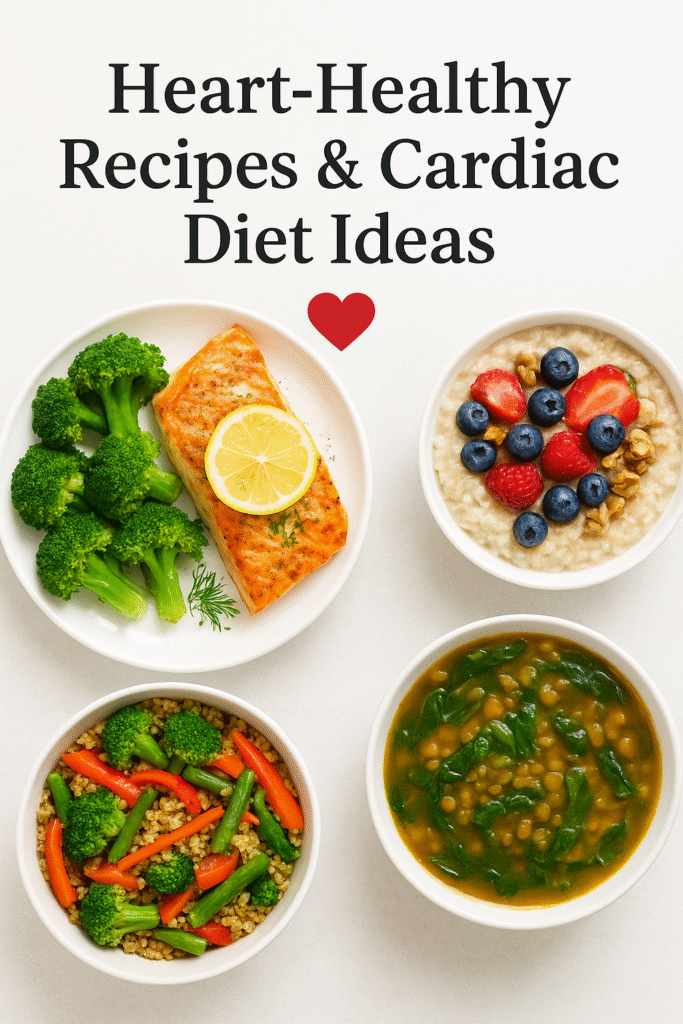
Maintaining a healthy heart starts with what’s on your plate. A cardiac diet emphasizes nutrient-rich foods that support cardiovascular health, lower cholesterol, reduce blood pressure, and promote overall wellness. Here’s a complete guide, along with simple recipes and a handy food chart to make heart-healthy eating easy.
Why a Cardiac Diet Matters
A heart-healthy diet helps prevent heart disease, stroke, and other cardiovascular problems. Key principles include:
Fruits and Vegetables: Packed with antioxidants, fiber, and vitamins.
Whole Grains: Brown rice, oats, quinoa, and whole-wheat products improve cholesterol levels.
Lean Proteins: Skinless poultry, fish, legumes, and tofu provide protein without unhealthy fats.
Healthy Fats: Olive oil, avocado, and nuts support heart function.
Low Sodium & Sugar: Reduces blood pressure and inflammation.
Heart-Healthy Food Chart
| Food Category | Heart-Friendly Choices | Notes / Benefits |
|---|---|---|
| Fruits | Berries, oranges, apples, bananas, pomegranate | High in fiber and antioxidants |
| Vegetables | Spinach, kale, broccoli, carrots, bell peppers, tomatoes | Rich in vitamins, minerals, and fiber |
| Whole Grains | Oats, brown rice, quinoa, barley, whole-wheat bread | Helps lower cholesterol, stabilizes blood sugar |
| Lean Proteins | Skinless chicken, turkey, lentils, beans, tofu, fish (salmon, mackerel) | Provides protein without saturated fat |
| Healthy Fats | Olive oil, avocado, almonds, walnuts, chia seeds | Supports heart function and reduces inflammation |
| Dairy (Low-Fat) | Skim milk, low-fat yogurt, cottage cheese | Provides calcium without excess saturated fat |
| Herbs & Spices | Garlic, turmeric, ginger, basil, rosemary | Adds flavor without salt |
| Beverages | Green tea, herbal tea, water | Hydrates and provides antioxidants |
Heart-Healthy Recipes
1. Grilled Salmon with Lemon and Herbs
Ingredients:
2 salmon fillets
1 tbsp olive oil
Lemon slices, dill or parsley, salt & pepper
Instructions:
Preheat the grill to medium heat.
Brush salmon with olive oil, season with herbs, salt, and pepper.
Grill 4–5 minutes per side.
Serve with steamed broccoli or a mixed green salad.
2. Quinoa & Veggie Stir-Fry
Ingredients:
1 cup quinoa, 2 cups water
1 cup broccoli, 1 red bell pepper, 1 carrot, chopped
1 tbsp olive oil, 2 garlic cloves, 2 tbsp low-sodium soy sauce
Instructions:
Cook quinoa in water until fluffy.
Sauté garlic in olive oil, add vegetables, cook 5–7 minutes.
Mix in quinoa and soy sauce, serve warm.
3. Oatmeal with Berries & Nuts
Ingredients:
1 cup oats, 2 cups low-fat milk or water
½ cup fresh berries
1 tbsp walnuts or almonds, pinch of cinnamon
Instructions:
Cook oats until creamy.
Top with berries, nuts, and cinnamon.
Enjoy a heart-smart breakfast.
4. Lentil & Spinach Soup
Ingredients:
1 cup lentils, 4 cups low-sodium vegetable broth
2 cups spinach, 1 onion, 2 garlic cloves, 1 carrot, chopped
1 tsp olive oil, salt & pepper to taste
Instructions:
Sauté onion, garlic, and carrot in olive oil.
Add lentils and broth, simmer 25–30 minutes.
Stir in spinach before serving.
Tips for Heart-Healthy Eating
Cook with baking, grilling, steaming, or sautéing instead of frying.
Use herbs and spices instead of salt for flavor.
Snack on fruits, nuts, or seeds instead of processed foods.
Include fatty fish in your meals at least twice a week.
Keep hydrated with water or herbal teas.
Eating for a healthy heart doesn’t mean sacrificing flavor. By combining nutrient-rich ingredients with simple cooking methods, you can create meals that are delicious, satisfying, and protective for your cardiovascular system.