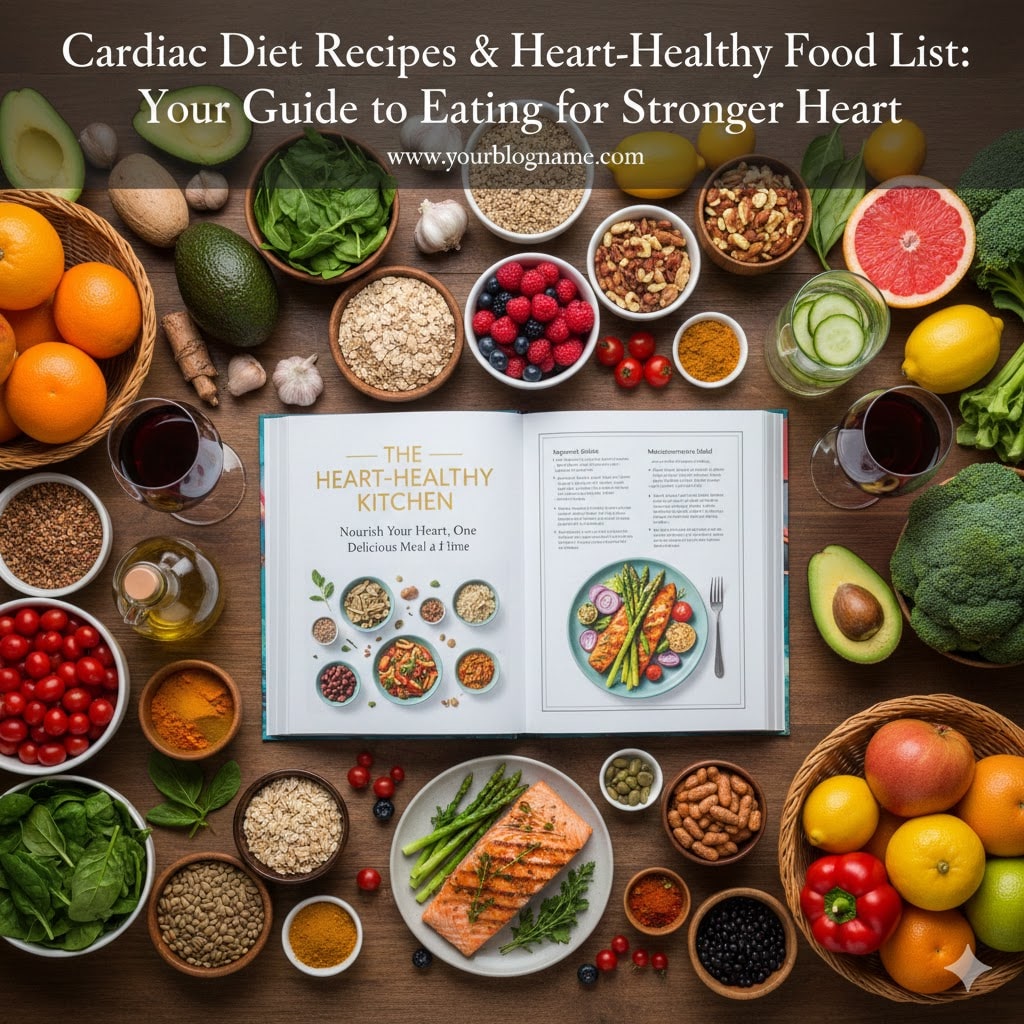
Cardiac Diet Recipes & Heart-Healthy Food List: Your Guide to Eating for a Stronger Heart
When it comes to protecting your heart, what you put on your plate is one of the most powerful tools you have. A cardiac diet—also known as a heart-healthy diet—focuses on foods that support your cardiovascular system, keep blood pressure in check, and improve cholesterol levels. Whether you’re managing an existing heart condition or simply building a healthier lifestyle, incorporating heart-friendly ingredients can make a measurable difference.
In this guide, you’ll discover a complete heart-healthy food list plus simple, delicious cardiac diet recipes you can enjoy every day.
Heart-Healthy Food List
1. Fruits & Vegetables
These should take up half your plate.
Berries (strawberries, blueberries, raspberries)
Leafy greens (spinach, kale, Swiss chard)
Cruciferous vegetables (broccoli, cauliflower, Brussels sprouts)
Tomatoes
Citrus fruits
Sweet potatoes
These foods are rich in fiber, antioxidants, and essential nutrients that help reduce inflammation and improve blood vessel health.
2. Whole Grains
Choose high-fiber, minimally processed grains.
Oats
Quinoa
Brown rice
Barley
Whole-wheat bread or pasta
Fiber reduces LDL (“bad”) cholesterol and improves digestion.
3. Lean Proteins
Focus on proteins that support heart function.
Skinless poultry
Beans, lentils, chickpeas
Tofu and tempeh
Fatty fish (salmon, mackerel, sardines—rich in omega-3s)
4. Healthy Fats
Replace saturated and trans fats with heart-protective fats.
Olive oil
Avocado
Nuts and seeds (almonds, chia, flaxseeds)
Nut butters (in moderation)
5. Low-Fat Dairy (or Fortified Alternatives)
Low-fat yogurt
Skim milk
Unsweetened plant-based milks
6. Herbs & Spices
Use these instead of salt:
Garlic
Turmeric
Basil
Rosemary
Cinnamon
Cardiac Diet Recipes
1. Mediterranean Chickpea Salad
A filling, fiber-rich lunch that supports cholesterol balance.
Ingredients:
1 can chickpeas, rinsed
1 cup cherry tomatoes, halved
1 cucumber, diced
¼ cup red onion, finely chopped
2 tbsp extra-virgin olive oil
Juice of 1 lemon
Fresh parsley
Black pepper to taste
Directions:
Combine chickpeas and vegetables in a bowl.
Drizzle with olive oil and lemon juice.
Add parsley and black pepper.
Toss and chill for 30 minutes before serving.
2. Heart-Healthy Salmon & Veggie Sheet Pan Dinner
Packed with omega-3 fatty acids and antioxidants.
Ingredients:
2 salmon fillets
1 zucchini, sliced
1 cup broccoli florets
1 red bell pepper, sliced
1 tbsp olive oil
1 tsp garlic powder
1 tsp paprika
Lemon slices
Directions:
Preheat oven to 400°F (200°C).
Spread vegetables on a lined baking sheet and drizzle with olive oil.
Season salmon and place on the pan.
Bake 15–18 minutes until salmon flakes easily.
Serve with fresh lemon.
3. Oatmeal with Berries & Flax
A breakfast that stabilizes blood sugar and supports heart health.
Ingredients:
1 cup rolled oats
2 cups water or low-fat milk
½ cup mixed berries
1 tbsp ground flaxseed
Dash of cinnamon
Directions:
Cook oats according to package directions.
Stir in cinnamon and flax.
Top with berries and enjoy warm.
4. Avocado Toast with Tomato & Basil
Perfect for a quick snack or light lunch.
Ingredients:
Whole-grain bread
½ avocado
Tomato slices
Fresh basil
Black pepper
Directions:
Toast bread.
Mash avocado on top.
Add tomato slices and basil.
Finish with pepper.
Tips for Following a Cardiac Diet
Aim for high fiber (25–30g/day).
Reduce sodium by choosing fresh over canned foods.
Limit red meat to occasional meals.
Choose water or unsweetened beverages over sugary drinks.
Meal-prep to avoid processed, high-salt foods.
Final Thoughts
A cardiac diet doesn’t mean giving up flavor or enjoying food less—it’s an opportunity to craft meals that nourish your body and energize your daily life. With the right ingredients and simple recipes like the ones above, eating for heart health feels natural, delicious, and sustainable.