Cortisol-Reducing Foods List: A Complete Guide to Managing Stress Naturally
Stress has become a constant companion in modern life. Whether it’s work pressure, family responsibilities, or digital overload, our bodies are often in a prolonged state of tension. At the center of this stress response is cortisol, often called the “stress hormone.”
While cortisol is essential for survival, chronically high levels can lead to serious health issues such as weight gain, anxiety, poor sleep, and weakened immunity. The good news? Your diet plays a powerful role in regulating cortisol levels.
In this comprehensive guide, we’ll explore a cortisol-reducing foods list, understand how these foods work, and learn how to incorporate them into your daily routine for better health and well-being.
What Is Cortisol and Why Does It Matter?
Cortisol is a hormone produced by the adrenal glands. It helps regulate:
- Blood sugar levels
- Metabolism
- Inflammation
- Sleep-wake cycle
- Stress response
In short bursts, cortisol is helpful—it gives you energy and focus. But when stress becomes chronic, cortisol levels remain elevated, leading to:
- Fat accumulation (especially belly fat)
- Fatigue and burnout
- Anxiety and mood swings
- Digestive issues
- Sleep disturbances
Managing cortisol is essential for maintaining both physical and mental health.
How Food Affects Cortisol Levels
What you eat directly impacts your hormones. Certain foods can either:
- Increase cortisol (processed foods, sugar, caffeine in excess)
- Reduce cortisol (nutrient-rich, whole foods)
Foods that help lower cortisol typically:
- Stabilize blood sugar
- Reduce inflammation
- Support brain health
- Promote relaxation
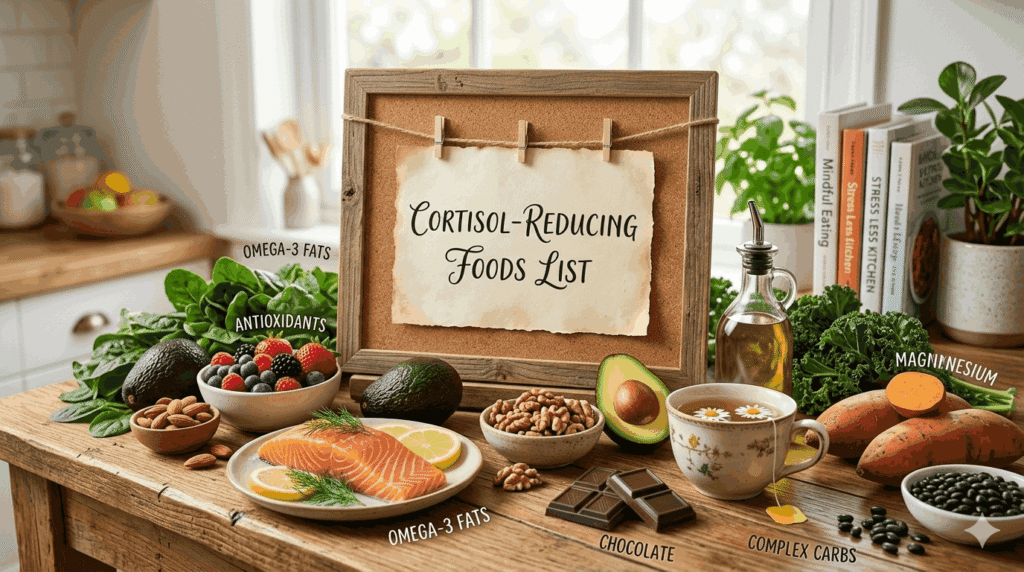
Top Cortisol-Reducing Foods List
Let’s break down the most effective foods that naturally help lower cortisol.
1. Dark Chocolate
Yes, you read that right! Dark chocolate (70% cocoa or higher) is rich in antioxidants that help reduce stress hormones.
Benefits:
- Lowers cortisol levels
- Improves mood
- Reduces inflammation
Tip: Stick to small portions—1–2 squares per day.
2. Fatty Fish
Fatty fish like salmon, sardines, and mackerel are packed with omega-3 fatty acids.
Benefits:
- Reduces inflammation
- Balances stress hormones
- Supports brain function
3. Leafy Greens
Spinach, kale, and other greens are rich in magnesium—a key mineral for stress regulation.
Benefits:
- Helps relax the nervous system
- Reduces cortisol production
4. Berries
Blueberries, strawberries, and raspberries are loaded with antioxidants and vitamin C.
Benefits:
- Protect against stress-related damage
- Lower cortisol levels
5. Nuts and Seeds
Almonds, walnuts, chia seeds, and flaxseeds are excellent stress-fighting foods.
Benefits:
- Provide healthy fats
- Support brain health
- Reduce inflammation
6. Whole Grains
Foods like oats, brown rice, and quinoa help stabilize blood sugar levels.
Benefits:
- Prevent cortisol spikes
- Promote steady energy
7. Avocados
Rich in healthy fats and potassium, avocados help regulate blood pressure and stress.
Benefits:
- Supports heart health
- Reduces stress hormones
8. Yogurt and Probiotics
Gut health is closely linked to stress levels. Yogurt and fermented foods support a healthy gut microbiome.
Benefits:
- Improves mood
- Reduces anxiety
- Balances hormones
9. Green Tea
Green tea contains L-theanine, an amino acid known for its calming effects.
Benefits:
- Promotes relaxation
- Reduces cortisol
10. Bananas
Bananas are rich in potassium and vitamin B6, which support brain health.
Benefits:
- Boost serotonin
- Reduce stress
11. Eggs
Eggs are nutrient-dense and rich in choline, which supports brain function.
Benefits:
- Helps regulate mood
- Supports hormone balance
12. Herbal Teas
Chamomile, ashwagandha, and peppermint teas are known for their calming properties.
Benefits:
- Reduce anxiety
- Improve sleep
- Lower cortisol
13. Citrus Fruits
Oranges, lemons, and grapefruits are high in vitamin C.
Benefits:
- Lowers cortisol levels
- Boosts immunity
14. Sweet Potatoes
A complex carbohydrate that helps regulate blood sugar and stress hormones.
Benefits:
- Provides sustained energy
- Reduces cortisol spikes
15. Turmeric
This powerful spice contains curcumin, known for its anti-inflammatory properties.
Benefits:
- Reduces inflammation
- Supports stress management
Foods That Increase Cortisol (Avoid or Limit)
While adding healthy foods is important, reducing harmful ones is equally crucial.
- Refined sugar
- Processed foods
- Excess caffeine
- Alcohol
- Fried foods
These can spike cortisol and worsen stress.
Sample Daily Meal Plan for Lowering Cortisol
Breakfast
- Oatmeal with berries and nuts
- Green tea
Lunch
- Grilled salmon with quinoa and spinach
Snack
- Dark chocolate + banana
Dinner
- Sweet potato, avocado salad, and yogurt
Lifestyle Tips to Support Cortisol Reduction
Food alone isn’t enough—combine it with healthy habits:
- Get 7–9 hours of sleep
- Practice mindfulness or meditation
- Exercise regularly
- Stay hydrated
- Limit screen time
Long-Term Benefits of Managing Cortisol
By consistently eating cortisol-reducing foods, you may experience:
- Better sleep quality
- Improved mood
- Reduced anxiety
- Healthy weight management
- Stronger immune system
FAQs About Cortisol-Reducing Foods
1. What is the fastest way to reduce cortisol naturally?
Combining a healthy diet with stress management techniques like deep breathing, exercise, and proper sleep is the most effective way.
2. Can food alone reduce cortisol levels?
Food plays a major role, but it works best when combined with lifestyle changes.
3. How long does it take to lower cortisol levels?
You may notice improvements within a few days to weeks, depending on consistency and overall lifestyle.
4. Is caffeine bad for cortisol?
In excess, yes. Moderate intake (1 cup/day) is generally safe.
5. Are supplements necessary?
Not always. A balanced diet can provide most nutrients needed to regulate cortisol.
6. Can high cortisol cause weight gain?
Yes, especially around the abdominal area.
7. Which vitamin is best for reducing cortisol?
Vitamin C and magnesium are particularly effective.
8. Are carbs good or bad for cortisol?
Healthy carbs like whole grains help reduce cortisol by stabilizing blood sugar.
9. Does fasting increase cortisol?
In some people, prolonged fasting may increase cortisol levels.
10. Can kids or teens follow a cortisol-reducing diet?
Yes, but it should be balanced and age-appropriate.
Final Thoughts
Managing stress doesn’t always require drastic changes. Sometimes, it starts with what’s on your plate. By incorporating these cortisol-reducing foods into your daily routine, you can naturally support your body’s stress response and improve your overall well-being.
Remember, consistency is key. Small, mindful changes in your diet can lead to powerful long-term results.