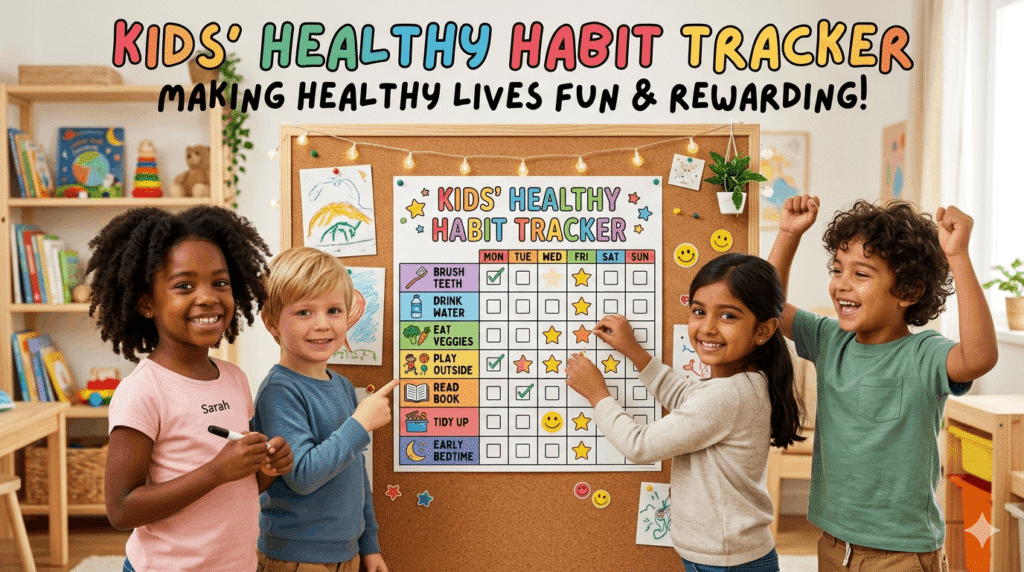
Healthy Habit Tracker for Kids: Building Lifelong Wellness One Small Step at a Time
In a world filled with fast-paced routines, screen distractions, and growing academic pressures, helping children develop healthy habits has never been more important. The foundation of lifelong well-being is built in childhood, and one of the most effective tools parents and educators can use is a healthy habit tracker for kids.
A habit tracker is more than just a chart—it’s a powerful visual and motivational system that encourages consistency, accountability, and self-discipline in a fun and engaging way. Whether your goal is to improve your child’s physical health, emotional well-being, or daily routine, a habit tracker can transform small actions into meaningful, lasting change.
In this blog post, we’ll explore everything you need to know about creating and using a healthy habit tracker for kids, including benefits, ideas, strategies, and a helpful FAQ section at the end.
What Is a Healthy Habit Tracker for Kids?
A healthy habit tracker is a simple tool—often a chart, checklist, or app—that allows children to monitor and record their daily habits. These habits can include activities like brushing teeth, drinking water, reading, exercising, or practicing gratitude.
The idea is simple: when kids track their behaviors visually, they become more aware of their actions and feel motivated to stay consistent. Over time, these repeated actions turn into habits.
Why Habit Tracking Works for Kids
Children thrive on structure, rewards, and visual feedback. Habit trackers tap into all three of these elements.
1. Builds Consistency
Consistency is the key to habit formation. Tracking helps kids repeat positive behaviors daily until they become automatic.
2. Encourages Responsibility
When children take ownership of their tracker, they feel responsible for their actions and progress.
3. Provides Visual Motivation
Seeing progress—like checkmarks, stars, or stickers—gives children a sense of accomplishment and encourages them to keep going.
4. Develops Self-Discipline
Habit tracking teaches kids to follow routines even when they don’t feel like it.
5. Boosts Confidence
Completing daily habits builds a sense of achievement and self-esteem.
Key Healthy Habits to Track
Not all habits are created equal. Focus on habits that promote physical, mental, and emotional well-being.
Physical Health Habits
- Brushing teeth twice a day
- Drinking enough water
- Eating fruits and vegetables
- Exercising or playing outdoors
- Getting enough sleep
Mental and Emotional Habits
- Practicing gratitude
- Journaling or expressing feelings
- Mindfulness or meditation
- Limiting screen time
Personal Development Habits
- Reading daily
- Completing homework
- Helping with chores
- Practicing a skill (music, art, etc.)
How to Create a Habit Tracker for Kids
Creating a habit tracker doesn’t have to be complicated. The key is to make it fun, simple, and engaging.
Step 1: Choose the Format
You can create a habit tracker in several ways:
- Printable charts
- Whiteboards
- Bullet journals
- Digital apps
For younger kids, colorful charts with stickers work best. Older kids may prefer journals or apps.
Step 2: Select 3–5 Habits
Avoid overwhelming your child. Start with a few key habits and gradually add more as they build consistency.
Step 3: Make It Visual and Fun
Use:
- Stickers
- Colors
- Stars
- Smileys
Gamifying the experience keeps kids interested and motivated.
Step 4: Set Clear Goals
Be specific:
- ❌ “Drink water”
- ✅ “Drink 5 glasses of water daily”
Clarity helps children understand what success looks like.
Step 5: Track Daily Progress
Encourage kids to mark their progress at the same time each day—such as before bedtime.
Step 6: Celebrate Achievements
Rewards don’t have to be big. Simple incentives work well:
- Extra playtime
- Choosing a movie
- A favorite treat
- Praise and encouragement
Tips for Making Habit Tracking Successful
Keep It Age-Appropriate
Younger children need simpler trackers, while older kids can handle more detailed systems.
Be Consistent
Help your child track habits daily to build routine.
Lead by Example
Children learn by observing. If they see you tracking your habits, they’ll be more likely to follow.
Focus on Progress, Not Perfection
Missed days are normal. Encourage effort rather than perfection.
Use Positive Reinforcement
Avoid punishment. Instead, praise effort and improvement.
Creative Habit Tracker Ideas for Kids
1. Sticker Chart
Kids earn a sticker for every completed habit.
2. Habit Jar
Each completed habit earns a token or bead in a jar.
3. Coloring Tracker
Kids color a section of a picture for each completed habit.
4. Weekly Challenge Board
Set weekly goals and track progress visually.
5. Digital Apps
For tech-savvy kids, apps can make tracking interactive.
Sample Weekly Habit Tracker
| Habit | Mon | Tue | Wed | Thu | Fri | Sat | Sun |
|---|---|---|---|---|---|---|---|
| Brush Teeth | ⭐ | ⭐ | ⭐ | ⭐ | ⭐ | ⭐ | ⭐ |
| Drink Water | ⭐ | ⭐ | ⭐ | ⭐ | ⭐ | ⭐ | ⭐ |
| Read 20 Minutes | ⭐ | ⭐ | ⭐ | ⭐ | ⭐ | ⭐ | ⭐ |
| Exercise | ⭐ | ⭐ | ⭐ | ⭐ | ⭐ | ⭐ | ⭐ |
Common Mistakes to Avoid
1. Tracking Too Many Habits
Start small to avoid burnout.
2. Being Too Strict
Flexibility is important—kids need room to learn.
3. Ignoring Effort
Celebrate attempts, not just perfect completion.
4. Making It Feel Like a Chore
Keep it fun and engaging.
Long-Term Benefits of Habit Tracking
When children consistently use habit trackers, they develop skills that last a lifetime:
- Time management
- Goal setting
- Self-motivation
- Discipline
- Healthy lifestyle choices
These skills contribute to success in school, relationships, and future careers.
How Parents Can Stay Involved
Parents play a crucial role in making habit tracking effective.
- Check in daily
- Offer encouragement
- Celebrate wins
- Adjust habits when needed
- Make it a bonding activity
Adapting Habit Trackers for Different Age Groups
Ages 3–6
- Use pictures instead of words
- Focus on simple habits
- Provide immediate rewards
Ages 7–10
- Introduce responsibility
- Allow kids to choose habits
- Use weekly rewards
Ages 11–14
- Encourage independence
- Use goal-setting techniques
- Introduce digital trackers
Digital vs. Paper Habit Trackers
Paper Trackers
Pros:
- Tangible and visual
- Less screen time
- Easy to customize
Cons:
- Can be lost or forgotten
Digital Trackers
Pros:
- Interactive
- Reminders and notifications
- Data tracking
Cons:
- Increased screen exposure
Making Habit Tracking a Family Activity
Turn habit tracking into a shared experience:
- Create a family tracker
- Set group goals
- Celebrate together
- Encourage healthy competition
This strengthens relationships and reinforces positive behaviors.
FAQs About Healthy Habit Trackers for Kids
1. At what age can kids start using a habit tracker?
Children as young as 3 years old can begin using simple habit trackers with visual cues like pictures and stickers.
2. How many habits should kids track at once?
Start with 3–5 habits. Too many habits can overwhelm children and reduce consistency.
3. What if my child loses interest?
Try changing the format, adding rewards, or letting your child choose their habits. Keeping it fun is key.
4. Should I reward my child for completing habits?
Yes, especially for younger kids. Rewards help reinforce behavior, but over time, shift toward intrinsic motivation.
5. How long does it take to form a habit?
On average, it takes about 21–66 days to form a habit, depending on the child and the activity.
6. Can habit tracking improve behavior?
Absolutely. Habit tracking builds discipline, responsibility, and awareness, which positively impacts behavior.
7. What if my child misses a day?
That’s normal. Encourage them to continue without guilt. Consistency over time matters more than perfection.
8. Are digital habit trackers safe for kids?
Yes, if used under parental supervision. Choose age-appropriate apps and limit screen time.
9. Can habit trackers help with school performance?
Yes. Tracking habits like reading, homework, and sleep can significantly improve academic performance.
10. How do I keep my child motivated long-term?
- Rotate habits
- Introduce new challenges
- Celebrate milestones
- Stay involved
Final Thoughts
A healthy habit tracker for kids is a simple yet powerful tool that can shape a child’s future. By encouraging consistency, responsibility, and self-awareness, habit tracking lays the groundwork for a lifetime of healthy choices.
Remember, the goal isn’t perfection—it’s progress. Start small, keep it fun, and celebrate every step forward. With the right approach, your child won’t just build habits—they’ll build a strong, confident, and healthy life.