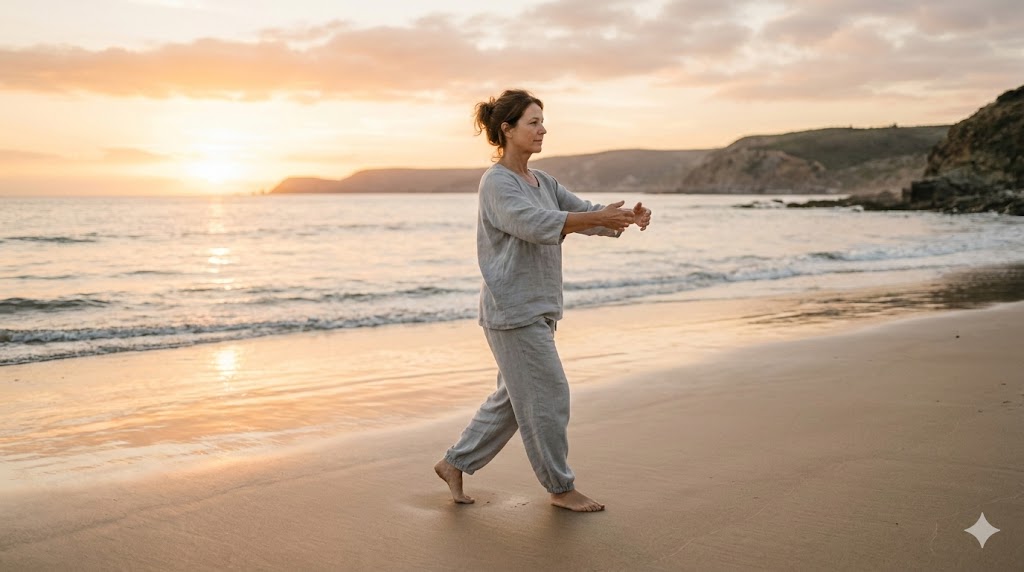
Tai Chi Walking for Beginners: A Complete Guide to Moving with Balance, Calm, and Confidence
If you’re looking for a gentle yet powerful way to improve balance, reduce stress, and reconnect with your body, Tai Chi walking may be exactly what you need.
Rooted in the ancient Chinese practice of Tai Chi (also called Tai Chi Chuan), Tai Chi walking transforms something as simple as taking a step into a mindful, healing movement. Unlike regular walking, this practice emphasizes slow, deliberate steps, controlled breathing, and full-body awareness.
In this complete beginner’s guide, you’ll learn:
What Tai Chi walking is
Its key benefits
Step-by-step instructions
Common mistakes to avoid
A beginner practice routine
Frequently asked questions
Let’s begin.
What Is Tai Chi Walking?
Tai Chi walking is a slow, mindful stepping technique derived from traditional Tai Chi forms. While Tai Chi includes flowing sequences of movements, Tai Chi walking isolates and refines one of the most fundamental actions: how you shift weight and step forward.
The focus is on:
Controlled weight transfer
Upright posture
Relaxed but intentional movement
Deep, natural breathing
Mental presence
It’s often described as “meditation in motion.”
Why Beginners Love Tai Chi Walking
You don’t need:
Prior martial arts experience
High fitness levels
Special equipment
A large space
Because it’s low-impact and slow-paced, it’s especially popular among older adults and those recovering from injury — but it benefits people of all ages.
Benefits of Tai Chi Walking
1. Improves Balance and Stability
Slow weight shifting trains your stabilizing muscles and enhances body awareness, reducing fall risk.
2. Strengthens the Legs Gently
Holding controlled positions builds strength in:
Quadriceps
Hamstrings
Calves
Glutes
Without joint strain.
3. Reduces Stress and Anxiety
The combination of slow movement and deep breathing activates the parasympathetic nervous system — your body’s “calm mode.”
4. Enhances Mind-Body Connection
Because every step is intentional, you become more aware of posture, tension, and alignment.
5. Supports Joint Health
Tai Chi walking encourages:
Proper knee alignment
Soft foot placement
Reduced impact
How to Do Tai Chi Walking (Step-by-Step)
Follow these beginner-friendly instructions:
Step 1: Find Your Starting Posture
Stand upright
Feet shoulder-width apart
Knees slightly bent
Spine tall but relaxed
Chin gently tucked
Shoulders soft
Arms hanging naturally
Imagine a string gently lifting the crown of your head upward.
Step 2: Shift Your Weight
Slowly shift your weight into your right leg.
Keep your torso upright.
Feel your right foot fully connected to the ground.
Let the left leg become “empty” (light).
Move slowly — this is not rushed.
Step 3: Step Forward Slowly
Lift your left foot gently.
Extend it forward, heel touching the ground first.
Place the foot down lightly — no stomping.
Keep most of your weight still in the back leg.
Step 4: Transfer the Weight Forward
Gradually shift weight onto the front (left) leg.
Move smoothly — no sudden shifts.
Keep your knees aligned with your toes.
Now your front leg is “full,” and your back leg is “empty.”
Step 5: Repeat on the Other Side
Shift weight, step forward, transfer smoothly.
That’s one Tai Chi walking cycle.
Breathing Technique for Beginners
Pair movement with natural breathing:
Inhale while preparing or stepping.
Exhale while shifting weight forward.
Keep breathing slow and quiet.
Never force the breath — let it flow naturally.
Common Mistakes to Avoid
❌ Leaning Forward
Keep your spine vertical. Movement happens through weight shift, not bending.
❌ Locking the Knees
Knees should stay soft and slightly bent.
❌ Rushing
Tai Chi walking is intentionally slow. Slower is better.
❌ Overstriding
Take small, manageable steps.
❌ Tension in Shoulders
Upper body remains relaxed.
Beginner Practice Routine (10 Minutes)
Here’s a simple starter session:
Minute 1–2:
Standing posture and breathing awareness
Minute 3–8:
Slow Tai Chi walking (5–10 steps forward, turn slowly, repeat)
Minute 9–10:
Stand still and observe your breath
Practice 3–5 times per week for noticeable improvements in balance and calmness.
Where Should You Practice?
You can practice:
In your living room
In a quiet park
On a flat outdoor surface
In a Tai Chi class
Comfortable clothing and flat shoes (or barefoot indoors) work best.
Is Tai Chi Walking the Same as Regular Walking?
No. Regular walking:
Is automatic
Often rushed
Focuses on destination
Tai Chi walking:
Is deliberate
Emphasizes balance
Trains body mechanics
Integrates breathing and awareness
Who Should Try Tai Chi Walking?
It’s ideal for:
Beginners to fitness
Seniors
People recovering from mild injuries
Anyone seeking stress relief
Office workers wanting mindful movement
If you have severe joint or neurological conditions, consult a healthcare provider first.
Frequently Asked Questions (FAQ)
1. How long does it take to see results?
Many beginners notice improved calmness immediately. Balance and strength improvements often appear within 3–6 weeks of regular practice.
2. Do I need to learn a full Tai Chi form first?
No. Tai Chi walking can be practiced independently and is often taught before full forms.
3. Can I practice Tai Chi walking every day?
Yes. Because it’s low-impact and gentle, daily practice is safe for most people.
4. Is Tai Chi walking good for seniors?
Absolutely. It’s widely recommended for improving balance and reducing fall risk in older adults.
5. How slow should I walk?
Slow enough that you can:
Feel every shift of weight
Maintain perfect balance
Breathe comfortably
If you feel rushed, slow down even more.
6. What if I lose balance?
Simply pause, reset your posture, and continue. Over time, your stability will improve.
7. Can Tai Chi walking help with anxiety?
Yes. The slow breathing and mindful focus can significantly calm the nervous system.
Final Thoughts
Tai Chi walking teaches you something powerful: how to move with intention.
In a fast-paced world, this simple practice reminds you to slow down, align your body, and breathe deeply. You don’t need complex choreography or intense workouts to improve your health — sometimes, transformation begins with a single mindful step.
If you’re just starting your wellness journey, Tai Chi walking is one of the safest and most rewarding places to begin.