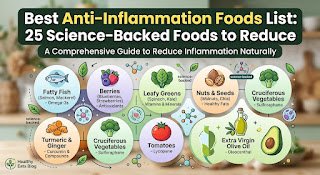
Best Anti-Inflammation Foods List: 25 Science-Backed Foods to Reduce Inflammation Naturally
Inflammation is a natural process that helps your body respond to injury, infection, and other stressors. But when inflammation becomes persistent, it may contribute to a variety of health problems. While no single food can eliminate inflammation, a balanced diet rich in minimally processed, nutrient-dense foods can support a healthy inflammatory response.
If you’re looking for the best anti-inflammation foods, focus on colorful fruits and vegetables, omega-3-rich foods, whole grains, legumes, nuts, seeds, and herbs and spices. These foods provide antioxidants, fiber, healthy fats, and plant compounds that can help support overall health.
Here are 25 science-backed foods to add to an anti-inflammatory diet.
1. Blueberries
Blueberries are one of the most popular anti-inflammatory fruits. They are rich in anthocyanins, antioxidant compounds responsible for their deep blue color.
These compounds help protect cells from oxidative stress and may support a healthy inflammatory response.
Easy ways to eat them:
- Add them to oatmeal
- Blend them into smoothies
- Serve them with Greek yogurt
- Eat them as a snack
2. Strawberries
Strawberries provide vitamin C, fiber, and polyphenols. Their antioxidant content makes them a great addition to a balanced anti-inflammatory eating pattern.
Try adding fresh strawberries to breakfast bowls, salads, smoothies, or overnight oats.
3. Cherries
Cherries contain anthocyanins and other polyphenols that have been studied for their potential effects on inflammation and exercise recovery.
Both sweet and tart cherries can fit into a healthy diet.
Tip: Choose whole cherries or unsweetened frozen cherries more often than sugary cherry products.
4. Fatty Fish
Fatty fish are among the best food sources of EPA and DHA omega-3 fatty acids.
Good choices include:
- Salmon
- Sardines
- Mackerel
- Trout
- Herring
Omega-3 fatty acids play important roles in regulating the body’s inflammatory processes.
Aim to include fatty fish in your meals regularly if you eat seafood.
5. Extra-Virgin Olive Oil
Extra-virgin olive oil is a key component of the Mediterranean diet. It contains monounsaturated fat and naturally occurring polyphenols.
Using it instead of butter or highly refined fats can be a simple way to improve the overall quality of your diet.
Try it in: salad dressings, roasted vegetables, soups, or grain bowls.
6. Spinach
Spinach is packed with vitamins, minerals, carotenoids, and other plant compounds.
Leafy greens such as spinach can contribute to a diet rich in antioxidants and fiber.
Add spinach to:
- Omelets
- Soups
- Smoothies
- Salads
- Stir-fries
7. Kale
Kale is another nutrient-dense leafy green that provides vitamin C, vitamin K, carotenoids, fiber, and other beneficial plant compounds.
You don’t need to eat huge amounts. Adding a serving to your meals regularly can help increase your vegetable intake.
8. Broccoli
Broccoli belongs to the cruciferous vegetable family and contains sulforaphane, a compound that has attracted significant scientific interest.
It also provides fiber, vitamin C, and several other nutrients.
For an easy side dish, steam broccoli and drizzle it with extra-virgin olive oil and lemon juice.
9. Avocados
Avocados provide monounsaturated fats, fiber, potassium, and various antioxidants.
Their combination of healthy fats and fiber makes them a filling addition to meals.
Try avocado on whole-grain toast, in salads, or alongside beans and vegetables.
10. Tomatoes
Tomatoes are especially rich in lycopene, a carotenoid antioxidant.
Cooking tomatoes with a healthy fat such as olive oil can help make lycopene more bioavailable.
Enjoy tomatoes in:
- Salads
- Soups
- Homemade sauces
- Grain bowls
- Sandwiches
11. Green Tea
Green tea contains polyphenols, particularly epigallocatechin gallate (EGCG).
Regularly drinking unsweetened green tea can be an easy way to add plant compounds to your diet without adding many calories.
If caffeine affects you, choose decaffeinated green tea.
12. Turmeric
Turmeric contains curcumin, a plant compound widely studied for its potential anti-inflammatory properties.
However, the amount of curcumin absorbed from ordinary turmeric can be relatively low. Combining turmeric with black pepper and a source of fat is commonly used in cooking to improve absorption.
Add turmeric to:
- Lentils
- Vegetable curries
- Soups
- Rice dishes
- Golden milk
13. Ginger
Ginger contains bioactive compounds such as gingerols and shogaols.
Fresh ginger can add flavor to meals while providing beneficial plant compounds.
Try grated ginger in tea, stir-fries, soups, smoothies, or homemade salad dressings.
14. Garlic
Garlic contains sulfur-containing compounds that have been investigated for their antioxidant and anti-inflammatory effects.
Crushing or chopping garlic activates some of its beneficial compounds.
Use fresh garlic in vegetables, soups, sauces, beans, and whole-grain dishes.
15. Walnuts
Walnuts are rich in plant-based omega-3 fatty acid alpha-linolenic acid (ALA), fiber, and polyphenols.
A small handful makes a convenient snack, or you can sprinkle chopped walnuts over oatmeal, salads, or yogurt.
16. Almonds
Almonds provide vitamin E, magnesium, fiber, protein, and healthy unsaturated fats.
Choose plain or lightly roasted almonds rather than varieties heavily coated with sugar or salt.
17. Flaxseeds
Ground flaxseeds are an excellent source of ALA omega-3 fatty acids and fiber.
Because whole flaxseeds can pass through the digestive system without being fully broken down, ground flaxseed is generally easier to incorporate into meals.
Add it to:
- Oatmeal
- Smoothies
- Yogurt
- Homemade energy bites
- Whole-grain baked goods
18. Chia Seeds
Chia seeds contain ALA omega-3s, fiber, protein, and minerals.
They absorb liquid and can be used to make chia pudding or added to smoothies and oatmeal.
Start with a small serving and drink enough fluids because chia seeds are high in fiber.
19. Beans
Beans are an excellent source of plant protein, fiber, vitamins, minerals, and polyphenols.
Great choices include:
- Black beans
- Kidney beans
- Chickpeas
- Pinto beans
- Navy beans
- Lentils
Regularly replacing some refined carbohydrates or processed meats with beans can improve the overall nutritional quality of your meals.
20. Lentils
Lentils are affordable, versatile, and rich in fiber and plant protein.
They can help make meals more filling while contributing important nutrients.
Try lentil soup, dal, lentil salads, or lentil-based grain bowls.
21. Oats
Oats are rich in a soluble fiber called beta-glucan.
A bowl of oatmeal topped with berries, walnuts, chia seeds, and cinnamon can combine several nutritious foods in one meal.
For a healthier option, choose plain oats and control the amount of added sugar yourself.
22. Whole Grains
Whole grains contain more fiber and nutrients than refined grains because they retain more of the grain’s original structure.
Examples include:
- Brown rice
- Quinoa
- Barley
- Whole-wheat bread
- Farro
- Steel-cut oats
Replacing some refined grains with whole grains can help support a fiber-rich eating pattern.
23. Dark Chocolate
Dark chocolate with a high cocoa content contains flavanols and other polyphenols.
If you enjoy chocolate, choose a small portion of dark chocolate with a high cocoa percentage and limit varieties loaded with added sugar.
Remember that dark chocolate is still calorie-dense, so moderation matters.
24. Oranges
Oranges provide vitamin C, fiber, folate, and various plant compounds.
Whole oranges are generally a better everyday choice than fruit juice because they provide more fiber and require more chewing.
Other citrus fruits such as grapefruit, lemons, limes, and mandarins can also contribute beneficial nutrients.
25. Pomegranate
Pomegranate and its juice contain polyphenols that have been studied for their antioxidant and potential anti-inflammatory effects.
For everyday eating, whole pomegranate arils provide fiber in addition to the fruit’s plant compounds.
Add them to salads, yogurt bowls, oatmeal, or grain dishes.
Best Anti-Inflammatory Foods at a Glance
| Food | Key Nutrients/Compounds |
|---|---|
| Blueberries | Anthocyanins |
| Strawberries | Vitamin C, polyphenols |
| Cherries | Anthocyanins |
| Salmon | EPA, DHA omega-3s |
| Olive oil | Monounsaturated fats, polyphenols |
| Spinach | Carotenoids, vitamins, fiber |
| Kale | Carotenoids, vitamin C |
| Broccoli | Sulforaphane, fiber |
| Avocado | Healthy fats, fiber |
| Tomatoes | Lycopene |
| Green tea | EGCG, polyphenols |
| Turmeric | Curcumin |
| Ginger | Gingerols |
| Garlic | Sulfur compounds |
| Walnuts | ALA, polyphenols |
| Almonds | Vitamin E, healthy fats |
| Flaxseeds | ALA, fiber |
| Chia seeds | ALA, fiber |
| Beans | Fiber, polyphenols |
| Lentils | Fiber, plant protein |
| Oats | Beta-glucan |
| Whole grains | Fiber, minerals |
| Dark chocolate | Cocoa flavanols |
| Oranges | Vitamin C, flavonoids |
| Pomegranate | Polyphenols |
How to Build an Anti-Inflammatory Plate
You don’t need to follow a complicated diet to include more anti-inflammatory foods. A simple meal formula can work well:
½ plate vegetables + ¼ plate protein + ¼ plate whole grains or other high-fiber carbohydrates + healthy fat
For example:
Lunch:
Grilled salmon + quinoa + roasted broccoli + spinach salad with extra-virgin olive oil.
Dinner:
Lentil curry + brown rice + mixed vegetables + avocado.
Breakfast:
Oatmeal + blueberries + chia seeds + walnuts.
The goal is not perfection. It’s about making nutritious foods a regular part of your eating pattern.
Foods to Limit for Better Inflammatory Health
Adding nutritious foods is only part of the picture. It can also help to reduce your intake of foods that are often associated with lower overall diet quality.
Consider limiting:
- Highly processed snacks
- Sugary drinks
- Excessive added sugar
- Refined grains
- Processed meats
- Frequently fried foods
- Foods high in trans fats
- Excessive alcohol
You don’t necessarily have to eliminate every treat. An overall healthy dietary pattern matters more than any single food.
Is an Anti-Inflammatory Diet Good for Weight Loss?
An anti-inflammatory eating pattern can support weight-management goals because many recommended foods are naturally rich in fiber, protein, water, and nutrients.
Vegetables, fruits, beans, whole grains, nuts, seeds, and lean protein can make meals more satisfying.
However, eating an anti-inflammatory food doesn’t automatically cause fat loss. Weight loss generally depends on your overall energy intake, activity level, sleep, and other lifestyle factors.
Simple 1-Day Anti-Inflammatory Meal Plan
Breakfast
- Oatmeal
- Blueberries
- Chia seeds
- Walnuts
- Unsweetened green tea
Lunch
- Chickpea and spinach salad
- Tomatoes
- Avocado
- Extra-virgin olive oil and lemon dressing
- Whole-grain bread
Snack
- A small handful of almonds
- Fresh strawberries
Dinner
- Baked salmon
- Broccoli
- Brown rice
- Mixed greens
Evening
If you’re hungry, consider plain Greek yogurt with a few berries or a small serving of fruit.
Frequently Asked Questions
What is the best food for reducing inflammation?
There isn’t one single best food. A combination of foods such as fatty fish, berries, leafy greens, vegetables, legumes, whole grains, nuts, seeds, and extra-virgin olive oil is a better approach.
Are bananas anti-inflammatory?
Bananas can be part of a healthy diet and provide potassium, vitamin B6, and fiber. Although they aren’t usually considered a standout anti-inflammatory food like berries or fatty fish, they can still contribute to an overall nutritious eating pattern.
Is coffee inflammatory?
For many people, moderate coffee consumption can fit into a healthy diet and coffee contains numerous bioactive compounds. However, individual responses vary, and adding large amounts of sugar or cream can change the nutritional profile of the drink.
Is oatmeal good for an anti-inflammatory diet?
Yes. Plain oats provide beta-glucan fiber and can be combined with other nutrient-rich foods such as berries, walnuts, chia seeds, and cinnamon.
Can an anti-inflammatory diet cure inflammation?
No. Food is only one part of overall health. Persistent or unexplained inflammation may have an underlying medical cause and should be discussed with a qualified healthcare professional.
Final Thoughts
The best anti-inflammatory diet isn’t about eating one magical ingredient. It’s about building a consistent eating pattern centered around whole and minimally processed foods.
Start by adding more berries, leafy greens, vegetables, beans, whole grains, nuts, seeds, fatty fish, olive oil, herbs, and spices to your meals. At the same time, reduce your reliance on highly processed foods and sugary drinks.
Even small changes can make your everyday diet more nutrient-dense and enjoyable.
Disclaimer: This article is for general educational purposes and isn’t a substitute for medical advice, diagnosis, or treatment. If you have a medical condition, take medication, or have persistent symptoms of inflammation, consult a qualified healthcare professional before making major dietary changes.